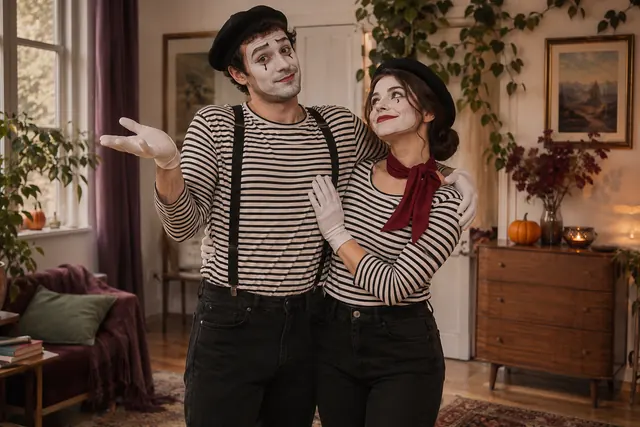
A budget DIY couple costume works best when you make the smallest possible piece that explains the idea. Use existing clothes as the base, choose one repeated visual detail, and build removable accessories instead of complete garments. This keeps the project affordable, easier to repair, and less likely to become a stressful unfinished pile.
Before buying supplies, agree on a spending limit and a stopping point. A costume can be finished when it is recognizable and comfortable; it does not need every detail from your first sketch.
Build a materials plan before a shopping list
Lay out two outfits you already own. Add anything reusable from your craft drawer: felt offcuts, ribbon, cardboard, paper, spare buttons, fabric scraps, or an old tote. Decide which pieces can return to everyday use afterward. Avoid permanently altering a favorite garment for one night unless you actively want that change.
Make a three-column list: already owned, can borrow, must buy. Borrow only items that the owner is comfortable having near makeup, food, or decorations. Keep the must-buy column short. Buying several “cheap” extras can quietly cost more than one carefully chosen accessory.
Preparation estimates below are planning guides for simple versions, not guarantees. Your tools, familiarity, and drying time will change the schedule. Leave room for a fitting rather than working until the moment you need to leave.
Project one: Moon and constellation
Materials: dark clothing, silver or cream felt, paper for a pattern, scissors, and a garment-appropriate removable attachment method. Estimated effort: roughly thirty to sixty minutes for simple shapes, plus a fitting.
- Draw a crescent moon and several large stars on paper. Keep the shapes simple enough to cut cleanly.
- Use the paper as a template for felt pieces. Make a small test piece before cutting all the material.
- Place the moon on one upper-body layer and a loose constellation on the other.
- Repeat one star on the moon outfit so the pair connects visually.
- Attach the pieces securely, then test sitting and reaching.
Do not connect stars with long dangling cords. Short stitched or drawn lines on a removable panel are easier to manage. If the attachment method does not suit your clothes, decorate a separate fabric sash or tote instead.
Project two: Garden ghosts
Materials: pale clothing, soft fabric scraps, a small amount of green felt, and optional fabric flowers. Estimated effort: about forty-five to ninety minutes for removable accents.
Start with cream, gray, or white outfits that allow normal movement. Add a small cluster of fabric leaves to each shoulder or pocket, then use different flowers to distinguish the two looks. The concept is two friendly ghosts haunting an overgrown garden.
Avoid the traditional full sheet over the head. It can complicate vision, stairs, and movement. Keep faces uncovered and choose ordinary shoes. If you want a flowing element, use a short scarf that stays clear of the ground and of candles, heaters, and cooking areas.
This costume can be quiet and romantic without elaborate makeup. Use the same leaf shape on both outfits, then stop. Extra decorations add work and can make the clothes harder to wear.
Project three: A tiny haunted cinema crew
Materials: black or neutral clothing, cardboard, markers, ribbon, and two paper badges. Estimated effort: thirty to sixty minutes.
One partner becomes the director of an imaginary spooky film, while the other becomes the cinema usher. Make a small cardboard clapboard with an original film title and a badge for the usher. Use a plain tray-shaped piece only for photographs rather than carrying loose snacks around all night.
The key is scale. A hand-sized clapboard is enough to communicate the idea. Round off sharp cardboard corners, avoid long neck cords, and make sure any badge attachment sits comfortably. If you enjoy the theme, carry it into a cozy spooky movie night after the party.
Project four: Two fictional potion-shop employees
Materials: aprons or old overshirts, paper labels, markers, and a small empty container for photographs if desired. Estimated effort: forty-five to seventy-five minutes.
Create an imaginary shop name and give each partner a role, such as recipe librarian and midnight inventory clerk. Decorate the aprons with matching paper badges or a removable fabric panel. Invent harmless product names like Bottled Monday Energy or Spare Courage.
Keep costume containers empty and clearly separate from real drinks, medicine, and cleaning products. You do not need liquids, powders, dry ice, or glowing chemicals to sell the idea. If a venue restricts props or outside containers, leave the container at home and use the badges alone.
Divide the work without doubling it
Give one person the measuring and cutting tasks and the other the labels and attachment planning, or split work according to what each person actually enjoys. Fit both outfits before finishing decorative details. Otherwise, you may spend time polishing an accessory that does not sit properly.
Use a shared stopping rule: if a piece needs repeated repair, replace it with a simpler version. A drawn moon on a removable badge is better than a fragile three-dimensional moon that keeps falling off. For more concepts before you commit, browse our creative couple costume guide.
The final fitting checklist
- Walk, sit, bend, and raise your arms in the finished outfits.
- Check clear vision and hearing, secure attachments, and accessible pockets.
- Keep loose fabric away from heat sources and walking surfaces.
- Confirm that coats and everyday shoes work with the concept.
- Photograph the pair together to see whether one shared detail is enough.
- Pack only a small repair kit appropriate to the materials you used.
When to simplify the project
If the supplies are becoming expensive or the deadline feels tight, keep the base outfit and replace the handmade construction with a paper badge. Our last-minute costumes using everyday clothes are designed around that approach. There is no prize for turning an enjoyable evening into a difficult craft deadline.
After Halloween, remove the attachments, save reusable shapes in a labeled envelope, and recycle or discard materials according to local guidance. A good budget costume leaves you with wearable clothes, a few useful supplies, and a project you would happily attempt again.